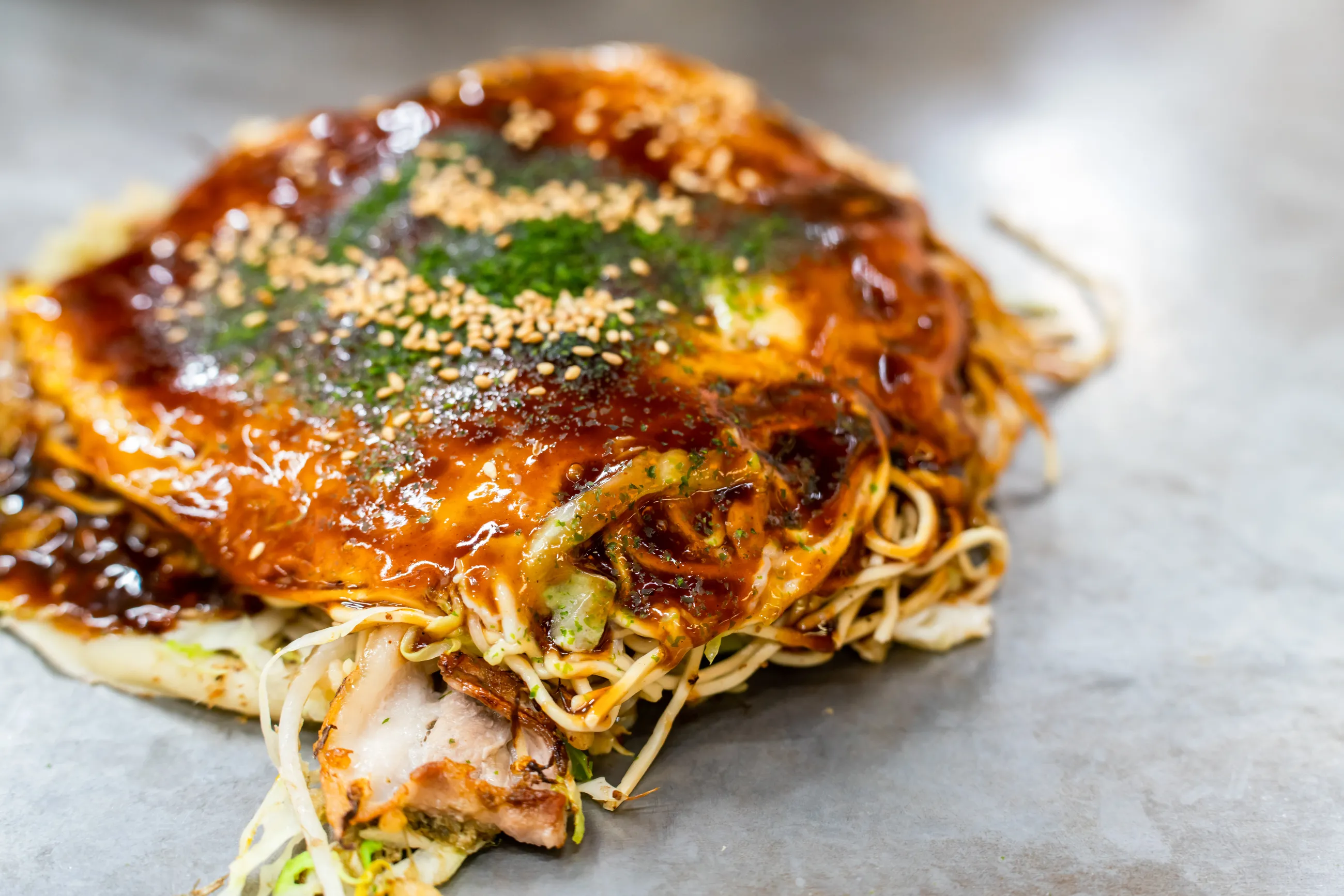
The beginning
Okonomiyaki began as issen yoshoku, a prewar snack for children: wheat flour mixed with water, cooked thin and brushed with Worcestershire sauce. In the food shortages after the war, it helped sustain the people of Hiroshima.
By around 1950 it had come to be called okonomiyaki, and the Hiroshima style took shape as cabbage and Chinese-style noodles were layered in. Okonomiyaki grew up alongside the city’s recovery.
The guides
Professor Kenichi Hosoi
A professor in the Faculty of Business Administration at Hiroshima University of Economics and a director of the Okonomiyaki Academy. He compiled a chronology of Hiroshima’s okonomiyaki.
Naoko Yamane
Editor-in-chief of TJ Hiroshima, the city’s town magazine, and editor of Nikkan Washira, Hiroshima Prefecture’s social media outlet.
Tatchan
Tatsuya Inoue, known as Tatchan, visits new okonomiyaki restaurants almost every day for Maioko, his guide to Hiroshima’s okonomiyaki. He began after losing his memory in 2017.
The old kitchens
Lineages
At Micchan Sohonten, the second Mitsuo Ise carries on the craft of the first, who died in 2024. At Ganso Hassho, the founders’ daughter has taken over the family restaurant.
Neighborhood griddles
Not the famous names. We want to record the small neighborhood restaurants still run by the grandmothers who have cooked at the same griddle for decades.
The makers
Noodle makers, cabbage farmers and the makers of Hiroshima’s distinctive okonomiyaki sauce.
Okonomiyaki sauce was born in postwar Hiroshima. Otafuku Sauce turned a simple problem, thin sauce running off onto the griddle, into a thick sauce that stays on the food. The company recovered from the bombing and from a fire that burned it down, and its story runs alongside the city’s own recovery.
The new kitchens
Younger owners are trying new ingredients and textures, from soft-cooked eggs to kale. Restaurants such as NIKUTAMA in Yokogawa show how much room for experimentation remains in this familiar food.
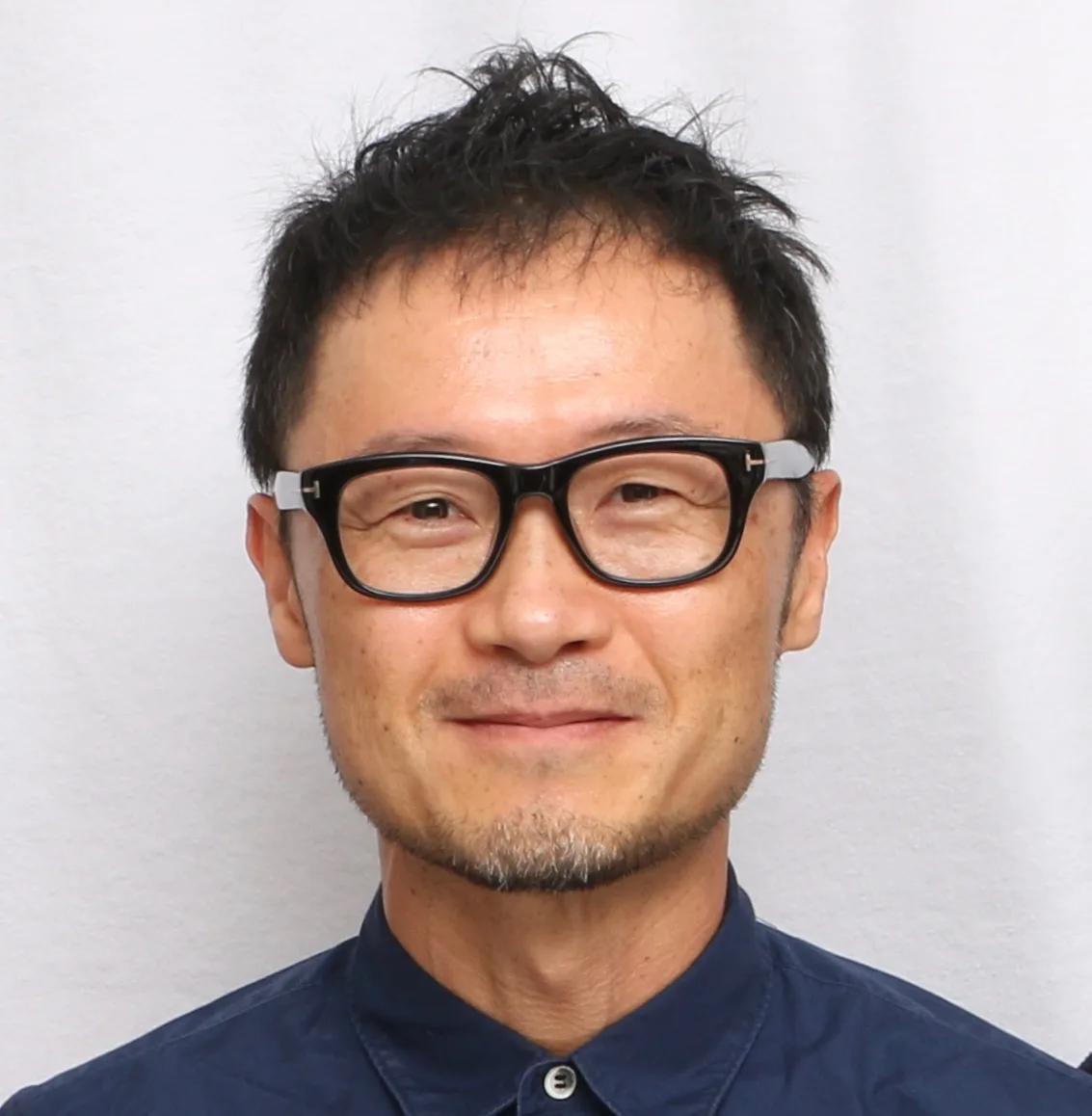
The director
“Like every Japanese person, I grew up knowing about the atomic bombing of Hiroshima. I’d also eaten what people call Hiroshima-style okonomiyaki. What I didn’t know was that this beautiful soul food fed the people of Hiroshima through the hunger after the war, and grew up alongside the city’s recovery.”
Mirai Konishi
Mirai Konishi is a Los Angeles–based filmmaker and a graduate of the University of Southern California’s graduate film program. His documentaries include Kampai! For the Love of Sake (2015), which premiered at the San Sebastián International Film Festival, and Kampai! Sake Sisters (2019), which premiered at the Far East Film Festival in Udine.
Support the film
Crowdfunding
Our crowdfunding campaign opens soon.
Support the film Coming soonPartners & sponsors
For companies and organizations who would like to take part in the film.
Festivals & press
Synopsis, director’s statement and production details for programmers and press.